
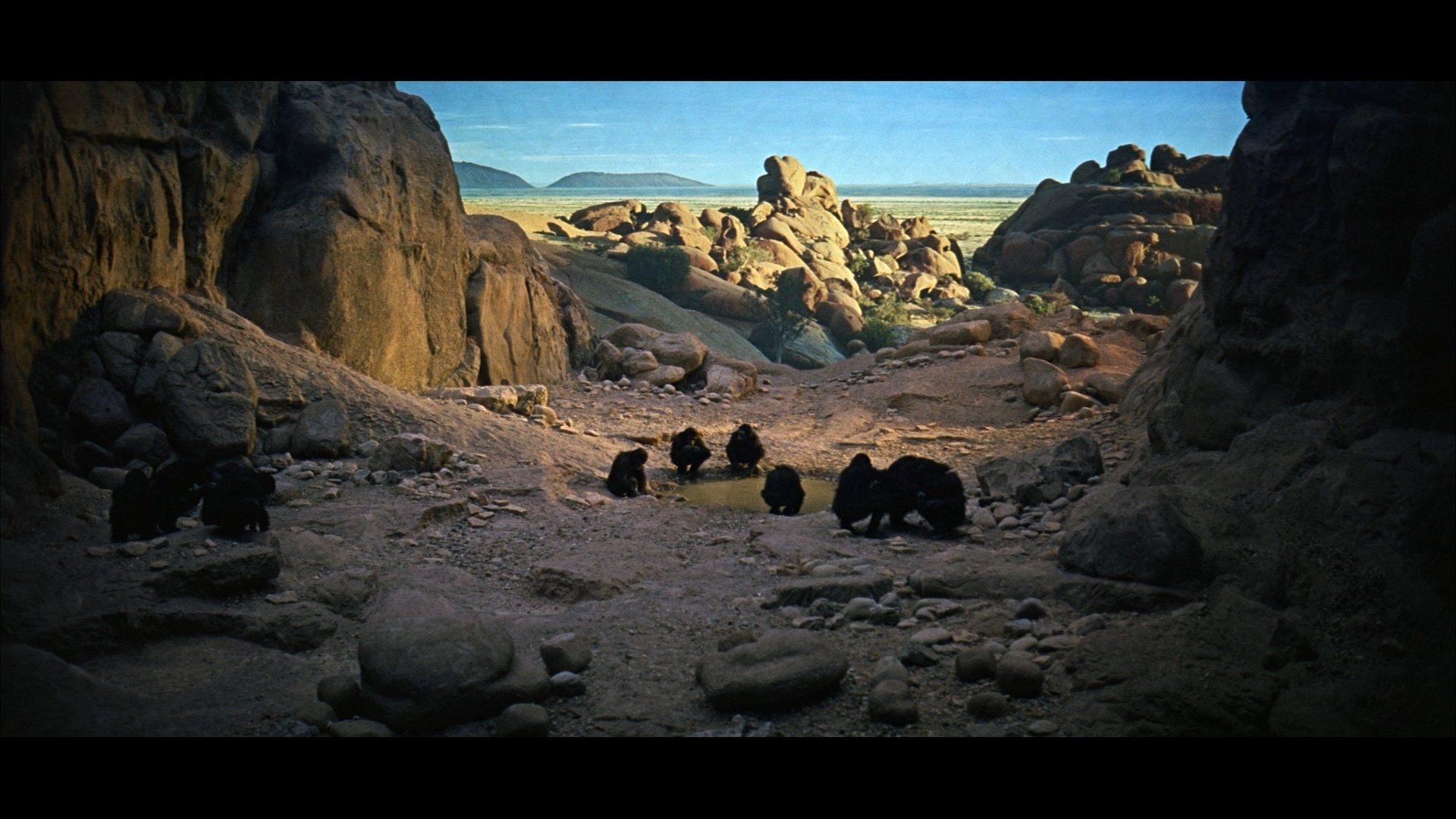
"2001: A Space Odyssey" is a 1968 science fiction film directed by Stanley Kubrick, celebrated as one of the greatest films in cinematic history. The film explores profound themes regarding humanity's evolution and its place in the universe, departing from traditional narrative storytelling with minimal dialogue and groundbreaking special effects. It begins in prehistoric Africa, where hominids encounter a mysterious black monolith that catalyzes their development into tool users. The narrative then transitions to a future space voyage involving a crew and a sentient computer named HAL 9000, whose malfunction raises questions about trust and reliance on technology.
The film's use of classical music, such as György Ligeti's compositions and Strauss's "Thus Spake Zarathustra," enhances the emotional and philosophical weight of the visuals, contributing to its iconic status. Despite mixed initial reviews, it garnered a significant following and became a cultural phenomenon, recognized for its artistic achievements and nominated for multiple Academy Awards, winning one for Best Visual Effects. "2001: A Space Odyssey" remains a critical touchstone in film history, influencing countless filmmakers and being included in various "greatest films" lists over the years. Its legacy continues to be celebrated for its ambition and visual storytelling.