
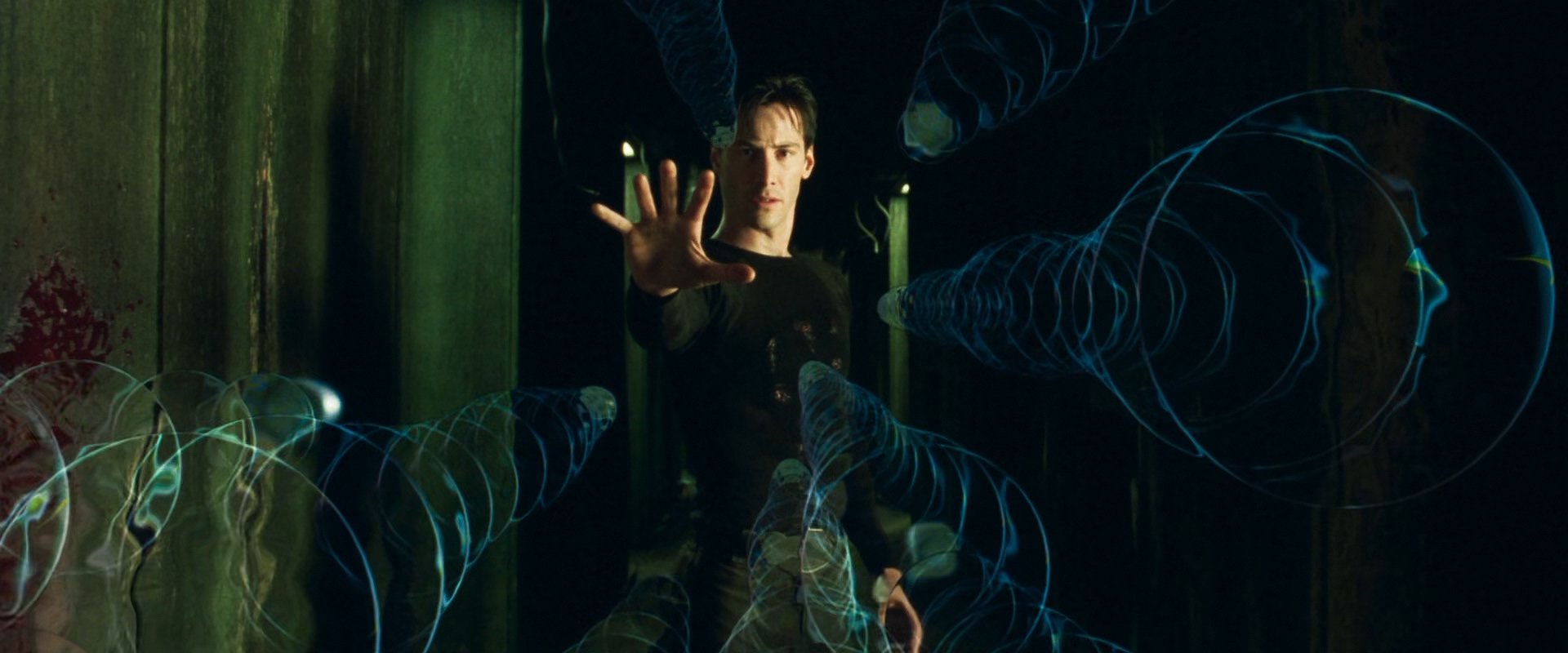
"The Matrix" is a groundbreaking science fiction film released in 1999, directed by the Wachowskis, which explores themes of reality and identity through the journey of its protagonist, Thomas "Neo" Anderson, played by Keanu Reeves. By day, Neo is a computer programmer for a large corporation, but by night, he is a hacker searching for the truth about his existence. He discovers that the year is not 1999 as he believes, but rather nearly two hundred years later, with machines controlling the world and using a simulated reality known as the Matrix to pacify humanity.
The film is rich with philosophical inquiries, raising questions about the nature of reality, self-identity, and the relationship between humans and technology. It incorporates numerous cultural allusions, including references to literature, philosophy, and other films, which contribute to its depth and appeal. Visually, "The Matrix" is notable for its innovative effects, such as the iconic bullet time technique that showcases the characters’ heightened perceptions.
Its release was both a commercial and critical success, winning four Academy Awards and influencing a wide range of media and popular culture. The film's impact led to the creation of a trilogy and additional sequels, expanding its narrative universe through various transmedia formats. Additionally, "The Matrix" has been recognized for its cultural significance, being added to the US National Film Registry, and continues to be a subject of scholarly study across various disciplines.
Hosted in the Madorsky Theater at Daytona State College, Bldg. 1200, Daytona Beach, FL 32114